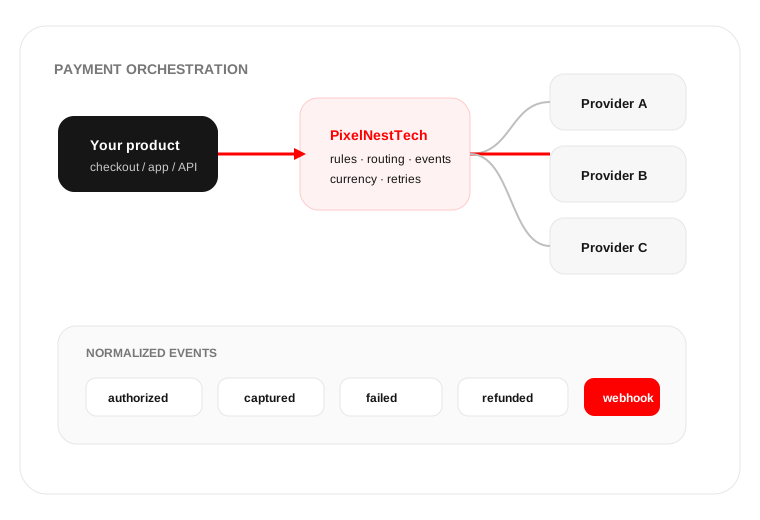
Payment Orchestration
Route payment intents across configured providers while keeping status, errors and references normalized.
- Provider routing and fallback policies
- Adapter-based provider abstraction
- Normalized transaction state
PixelNestTech is designed for companies building payment-enabled products where provider abstraction and operational visibility matter.
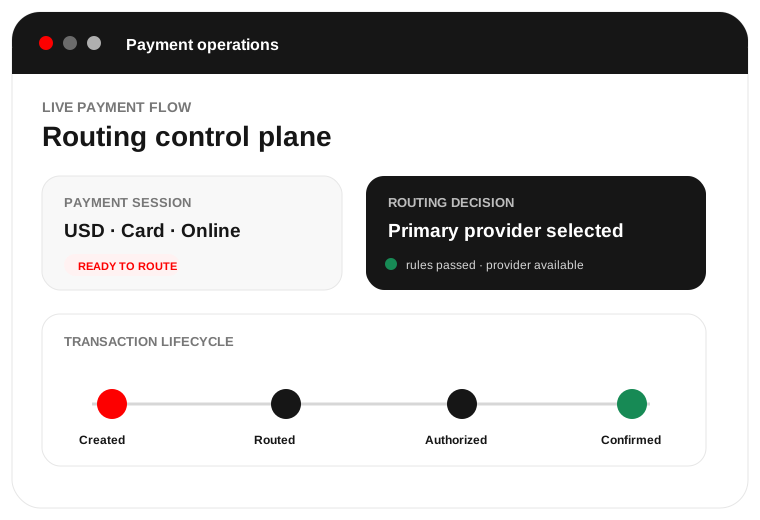
Use dedicated modules for routing, payouts, recurring billing, collection references, risk controls, digital assets and wallet-style balances while keeping provider-specific behavior behind adapters.
Route payment intents across configured providers while keeping status, errors and references normalized.
Coordinate multi-provider beneficiary payouts through one business-facing workflow.
Connect provider-issued collection identifiers to customer, invoice and reconciliation workflows.
Model subscription state, billing schedules and payment attempts independently from one provider.
Evaluate configurable transaction signals before selected payment and payout actions are executed.
Add crypto and stablecoin payment flows through configured digital-asset providers.
Build multi-currency wallet experiences with ledger balances, transfers and provider-connected movement.
Create customer-facing payment products on top of a stable orchestration layer instead of tying product logic to one provider.
Coordinate collection and payout workflows while keeping internal order, seller and beneficiary references connected.
Embed payment capability into software products without letting provider-specific behavior leak into every product module.
Build checkout and payment-status workflows around your own order lifecycle, with provider choice remaining configurable.
Support invoice, account or service payments through a common transaction model and multiple configured rails.
Centralize provider connectivity, transaction operations and routing logic across multiple internal products.
A single provider and one payment method may not need orchestration. Multiple providers, currencies, products or payout flows usually introduce duplicated logic and fragmented operations.