
Idempotency
Protect repeated requests from creating duplicate payment operations.
PixelNestTech is designed for server-side payment integrations with explicit references, normalized states, signed requests, webhooks and idempotent operating patterns.
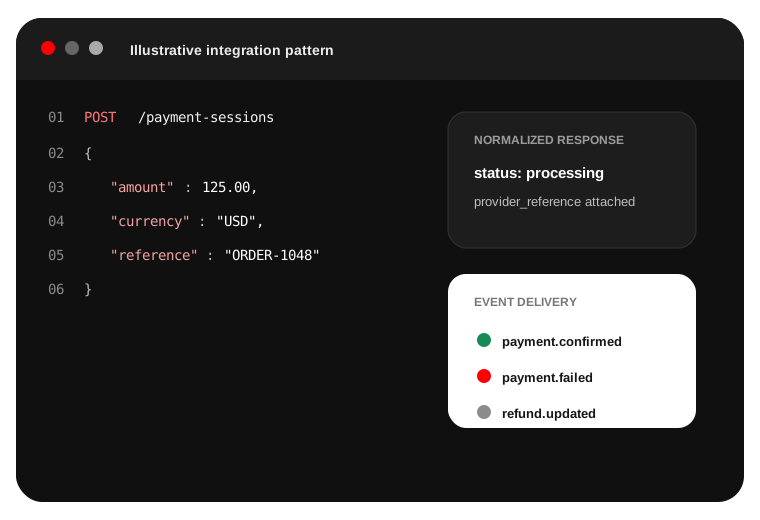
A typical integration creates a payment session, persists the platform reference, reacts to webhook events and verifies state when business logic requires it.
# Example only — final schema depends on implementation
POST /payment-sessions
{
  "reference": "ORDER-1048",
  "amount": 125.00,
  "currency": "USD",
  "payment_method": "card"
}
Protect repeated requests from creating duplicate payment operations.
Receive normalized transaction events and process them with replay-safe handlers.
Use explicit backend verification when fulfilment or payout logic depends on final state.
Keep provider credentials and signing material on trusted server-side infrastructure.
PixelNestTech can be evaluated against your transaction model, provider set and event-handling requirements before implementation begins.