
Collect signals
Use transaction, account, velocity and provider-context attributes available to your deployment.
Evaluate transaction signals against business-defined rules before selected payment or payout actions are submitted to connected providers, while retaining a clear decision trail for operations.
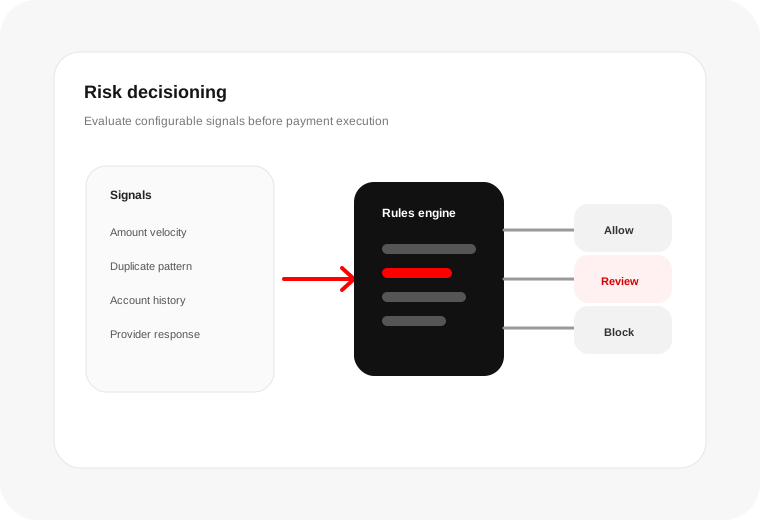
PixelNestTech can provide a configurable decision layer that evaluates available transaction attributes before the orchestration layer continues to the provider.
Use transaction, account, velocity and provider-context attributes available to your deployment.
Apply ordered business rules and thresholds to the requested payment or payout action.
Allow, review or block the workflow according to the configured rule outcome.
Store the rule result and decision context for support, reconciliation and tuning.
Rules should be designed around the actual data available to your product rather than assuming signals that are not collected or reliable.
Track repeated activity over a defined time window and compare it with your business thresholds.
Record which rule produced a decision so support teams can understand why a transaction was handled differently.
Route selected transactions into a business review state instead of forcing every uncertain case into allow or block.
Return a structured result that the payment or payout workflow can consume before provider execution.
{
  "transaction_ref": "PAY-8421",
  "decision": "review",
  "reason": "velocity_threshold",
  "rule_version": "risk-12"
}Talk to PixelNestTech about signal design, deterministic rules, review states and transaction-level audit trails.